 s
s

Weighing systems for coffee roasting
Solutions for the roasting process and coffee storage.
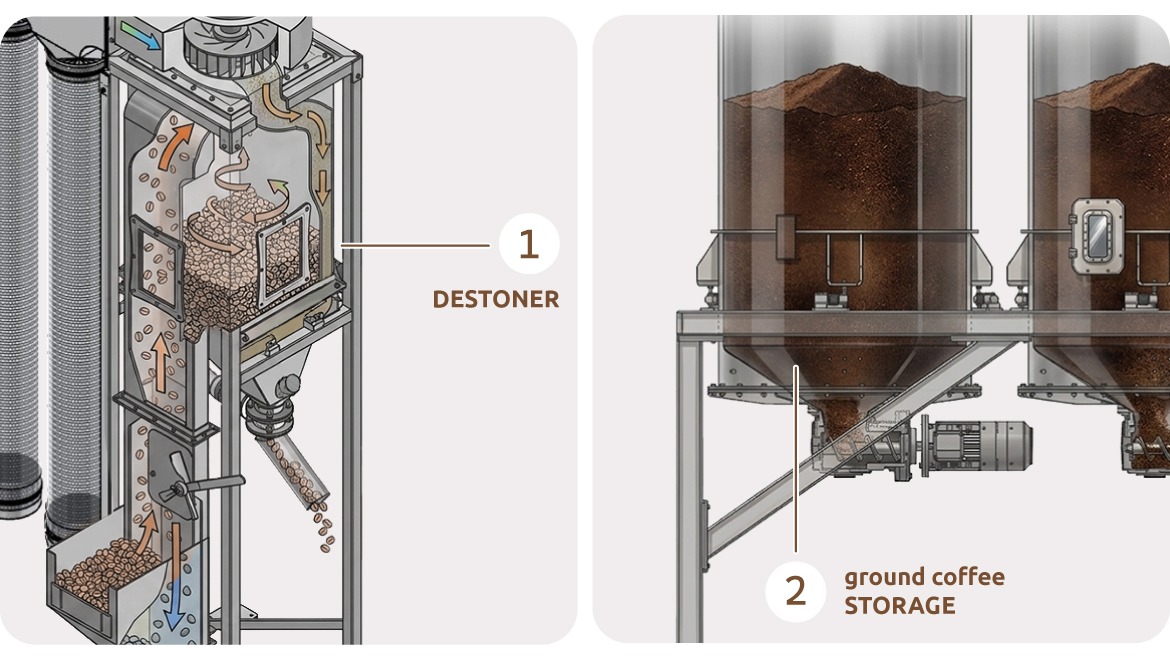
Weighing is a fundamental component in the coffe industry.
Weighing systems are present at every stage of the supply chain: from cultivation and green coffee bean harvesting, through roasting, to grinding and packaging.
IMF is an Italian company specializing in the design and manufacture of artisan and industrial roasting machines and complete systems for the coffee industry.
In collaboration with IMF, we developed two weighing systems for two different stages of coffee processing: roasting and ground coffee storage.
Table of contents
1- Weight monitoring on the loading hopper and destoner of an artisan roasting machine.
The sensors monitor the weight of incoming green coffee and outgoing roasted coffee, improving process quality and overall plant efficiency.
2- Silo weighing for ground coffee storage.
Monitoring the weight of ground coffee inside storage silos and transmitting the data to management software, to improve and keep track of product traceability.
1- Weight monitoring on the loading hopper and destoner of an artisan roasting machine.
Requirement
To monitor the weight of incoming green coffee and outgoing roasted and cooled coffee, in order to accurately measure the weight loss of the beans during the roasting process.
Precisely monitoring this data is essential to ensure process repeatability and final product quality.
During roasting, coffee undergoes a significant weight loss due to two factors: evaporation of the water contained in the green bean, and loss of organic material, specifically the silver skin that detaches during process. This loss, known as "weight loss" or "roast loss", typically ranges between 12% and 20% of the initial weight, depending on bean variety, origin, and roast profile.
The weighing system must be fast and accurate, while also occupying minimal space and integrating seamlessly with IMF's production control software.
Our solution
How does it work?
The monitoring process takes place in two consecutives phases, with load cells installed at two distinct points in the system:
- 3 upstream of the roaster, on the coffee loading hopper;
- 4 downstream of the process, on the destoner, for the roasting and cooling phase.
They are mounted on raised plates and secured to the frame with two M12 bolts. Each load cell is simultaneously connected to the destoner with a threaded rod.
The 3 cells on the loading hopper detect the weight of the incoming green coffee and transmit the data to the PLC as an initial reference value.
The coffee beans are then roasted and cooled, and arrive at the destoner for removal of foreign matter.
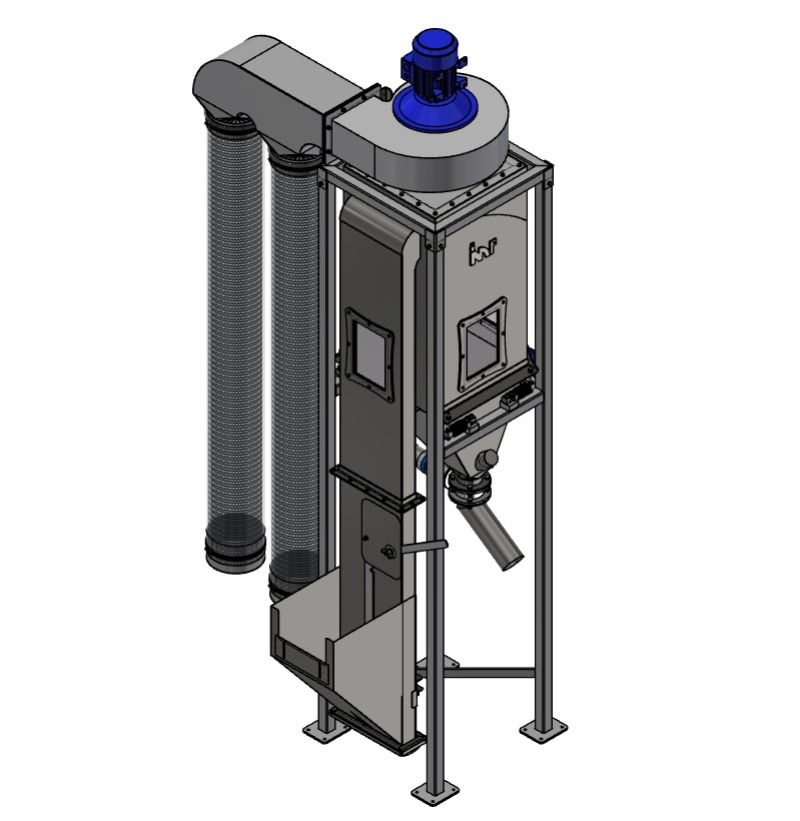
The destoner is a machine that exploits gravitational flotation with a dual function: transporting roasted beans from the cooling tank outlet to a raised hopper, and simultaneously removing heavier foreign matter.
Thanks to the airflow generated by the machine, the lighter beans are lifted while heavier foreign matter falls by gravity into a dedicated bin.
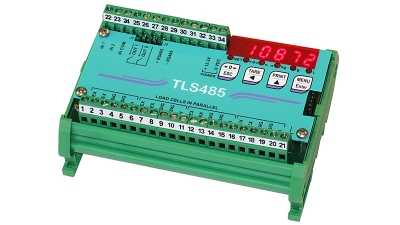
At the end of the cleaning process, the 4 load cells installed on the destoner detect the product's new weight and transfer it to the TLS485 weight transmitter, which in turn sends the data to the PLC controlled by the management software, which can then verify that the weight change before and after roasting falls within the expected parameters.
The software compares the green coffee weight against the roasted coffee weight and calculates the percentage loss.
The added value
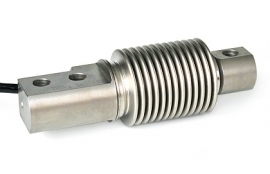
- The FCOL load cells are compact and robust, ideal for precise weighing with a high response speed. Fast, accurate measurement is essential for quality control, production traceability, and safe transfer to storage.
- The TLS485 weight trasnmitter applies a digital filter that reduces the effects of the typical mechanical oscillations of moving machinery. It ensures stable and accurate data even during loading and unloading phases.
- The TLS485 weight transmitter seamlessly integrates the load cells with the management software, transferring data and allowing the detected weight to be displayed on devices located away from the machine. This turns the destoner into a central data monitoring point and increases overall plant efficiency.
- Accurately detecting and monitoring roast loss means verifying that the process is running correctly: depending on variety, coffee beans contain varying amounts of water and organic material, so weight loss differs by bean type.
2- Silo weighing for ground coffee storage.
Requirement
To measure the weight of ground coffee inside each silo, in order to monitor the quantity of product loaded in and discharged out.
The system must operate in a working environment with an explosion-risk atmosphere classified ATEX 2-22, and interface with IMF's dedicated management sotware.
Our solution
For each circular-section silo, we used:
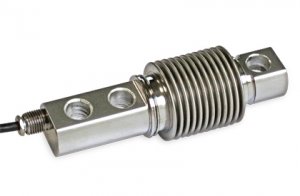
- 3 FCAX 500 bending beam load cells, ATEX certified;
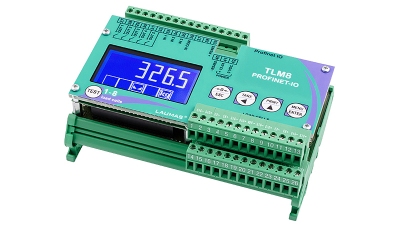
- 1 TLM8 Profinet/IO weight transmitter;
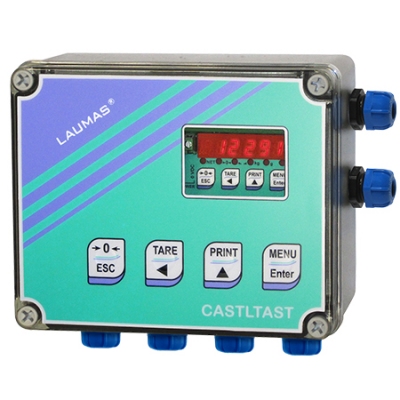
- 1 CASTLM8I enclosure, X version in AISI 304 stainless steel, ATEX certified, for the TLM8 weight transmitter.
How it works
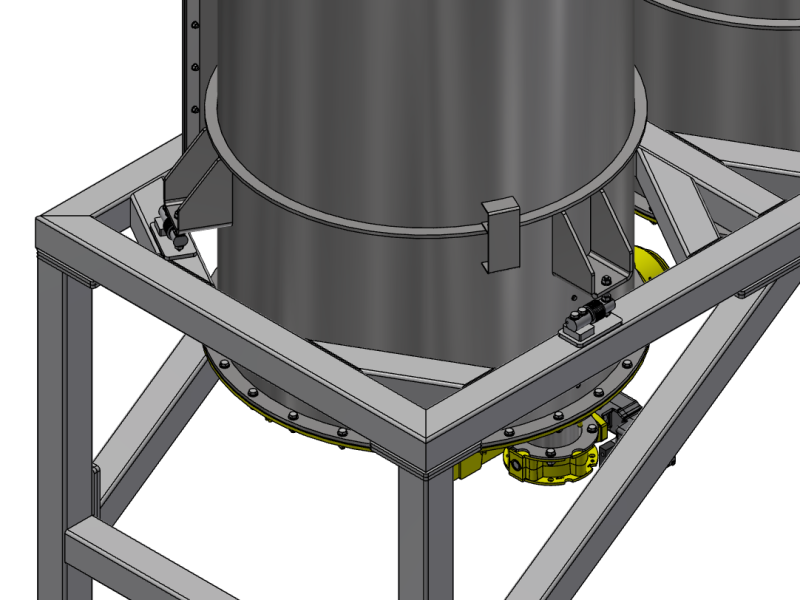
The 3 load cells are installed at the base of the silo and fastened to a carbon steel support structure.
They detect the weight of the product inside the silo and transfer the data to the TLM8 weight transmitter, installed in the CASTLM8I enclosure near the weighing system.
The weight transmitter sends the data via Profinet/IO fieldbus to the PLC located far from the weighing system. The PLC then interfaces with the management software, which logs the data to track all product movements in and out.
The added value
- The FCAX load cells, integrated with the management software, are an excellent alternative to installing multiple rotary level sensors for starting and stopping product loading: a rotary sensor only indicates the physical fill level of the silo, whereas the load cell continuously monitors its weight.
- The TLM8 weight transmitter features built-in diagnostics: it monitors the connection status of each individual channel and detects any malfunctions, errors, or faults on the load cells.
This simplifies process control and management operations. - The system seamlessly integrates weighing functions into the logic of IMF's PLC-controlled software.
- The recorded weighing data improves product traceability, enabling early identification of any issues, guaranteeing product quality, and optimizing logistics.
Search in the blog
Search by tag
Recent articles
Weighing solutions for weighbridges
5 different combinations using our weighing components, ideal for building both pit-mounted and above-ground industrial vehicle scales.
Read more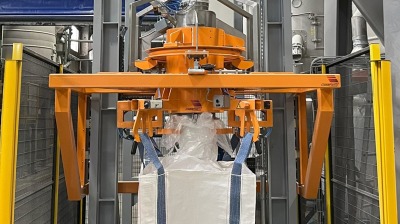
Weighing system for a semiautomatic big bag filling machine
Weighing system for a big bag filling machine, built for the mechanical extraction of plastic granules and their bagging into big bags up to 2 m3.
Read more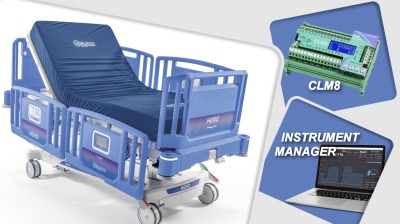
Weighing system for a hospital bed
In collaboration with Malvestio, we have developed a weighing system for a pediatric intensive care hospital bed: junction box and software for management and calibration.
Read more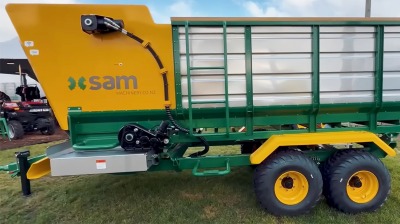
Weighing and dosing system on agricultural machinery
Weighing system on a fertilizer spreader machine for controlling and dosing fertilizer, compost, etc. contained in large polyethylene hoppers. It must operate in harsh environments and integrate seamlessly with the machinery and control system.
Read moreمنتجات ذات صلة
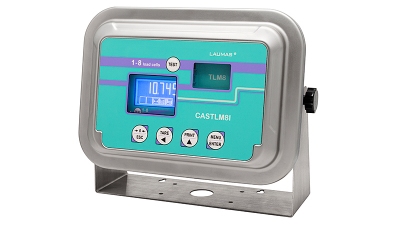
CASTLM8I
Weight transmitters
CASTLTASTATEX
Weight transmitters
FCAX
Bending beam load cells
FCOL
Bending beam load cells
TLM8 PROFINET IO
Weight transmitters
TLS 485
Weight transmitters