 s
s

Calibration and adjustment
What they are and what they are used for.
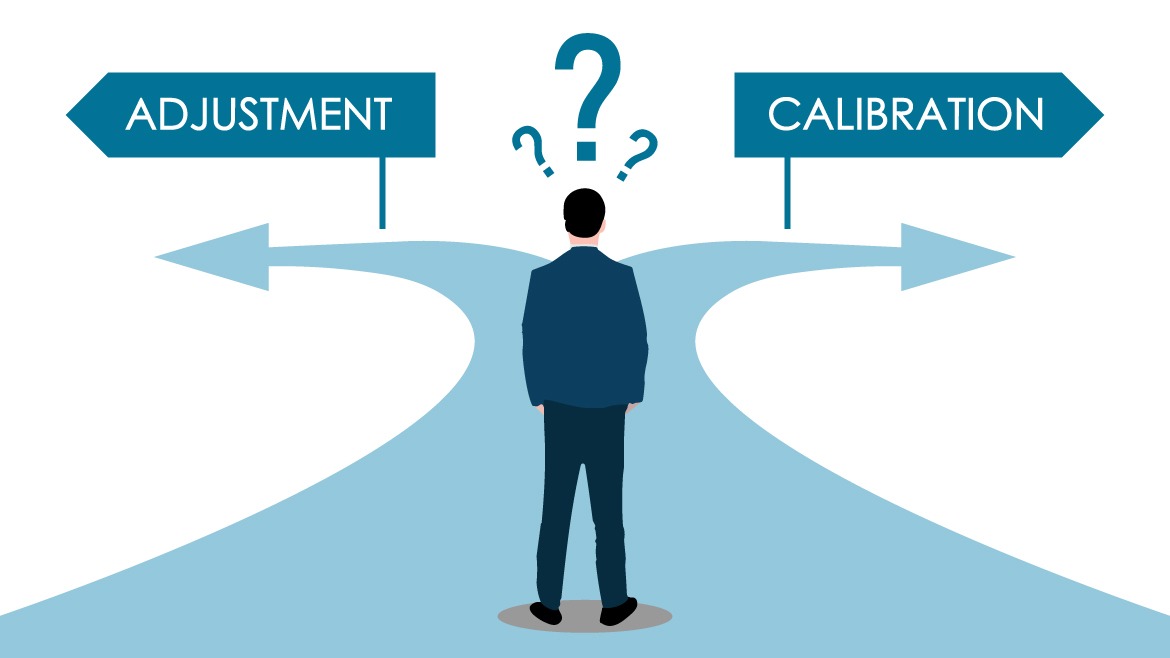
Calibration and adjustment are two operations used to verify and adjust the measuring capability of weighing instruments.
Both aim to guarantee and improve the accuracy of the instruments, and the two terms are often confused, but they have substantial differences.
So, what are calibration and adjustment, and how do they differ?
▷ Calibration
Calibration is a periodic check performed on an instrument to identify any measurement errors compared to a predefined standard.
It is used to asses its metrological characteristics (linearity, repeatability, etc.) and is carried out at different stages in the instrument's life, for example:
- before commissioning;
- after a repair;
- at predetermined intervals depending on its intended use.
Calibration is performed by comparing the instrument with reference standards of higher accuracy and does not require any adjustment intervention. It is also necessary to certify the quality of production processes according to ISO 9001 standards.
▷ Adjustment
Adjustment is a technical intervention performed on an instrument to increase its accuracy.
It is used to set technical parameters so that measurement errors are minimized or fall within the established tolerances.
Normally, an instrument is adjusted in two phases: first theoretical adjustment, then actual adjustment.
Theoretical adjustment is the initial operation and is based on the instrument's technical specifications and its principle of operation. The nominal values for the load cells and the system are set on the instrument.
Actual adjustment serves to verify that the values measured after theoretical adjustment are accurate, so as to correct any errors. Known loads (e.g., sample weights) are used for this, allowing precise adjustment of the actual load receptor.
By convention, the term "calibration" is often used for this operation as well.
In reality, the correct term to use, according to the International Vocabulary of Metrology (VIM) and as we have chosen for this article, is "adjustment".
"Calibration", in fact, refers to the measurement activity and not to the modification of the instrument's parameters.
▷ The differences
▷ Calibration is a test performed on the instrument to verify its metrological characteristics and does not involve any direct action on the instrument itself.
▷ Adjustment serves to correct measurement errors and requires a specific technical intervention.
Sometimes, the two operations can be complementary.
If, during calibration, it is found that the instrument is outside the required accuracy, it is necessary to carry out adjustment operations, such as linearization. After that, a new calibration is performed to verify that the instrument is within the required tolerance limits.
▷ Appropriate equipment and certified reference measurement standards are required for calibration, which is why it is performed in a laboratory (or directly in the field) by accredited or specialized bodies and results in the issuance of a calibration document (calibration certificate or calibration report).
▷ Adjustment, on the other hand, is performed by the user or routine maintenance personnel.
Adjustment is carried out directly on the instrument and only requires having sample weights available.
What is the difference between an accredited calibration certificate and a calibration report? Which document should you choose?
▷ Calibration should be requested periodically at intervals that may vary depending on the type of instrument, its application, and the regulations and requirements of the relevant sectors.
▷ Unlike calibration, adjustment does not need to be performed periodically. Usually, it is only repeated if verification or calibration activities reveal anomalies or problems.
How do you adjust the weight transmitter or indicator?
Search in the blog
Search by tag
Recent articles
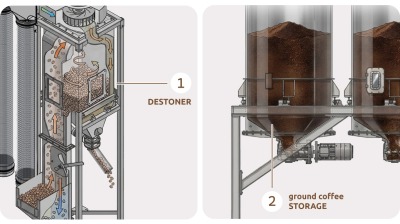
Weighing systems for coffee roasting
Two solutions for IMF: monitoring weight during the coffee roasting process and checking the ground coffee flowing in and out of the storage silos. Integration with management software to monitor and improve product traceability.
Read more
Weighing solutions for weighbridges
5 different combinations using our weighing components, ideal for building both pit-mounted and above-ground industrial vehicle scales.
Read more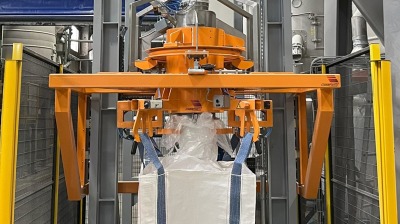
Weighing system for a semiautomatic big bag filling machine
Weighing system for a big bag filling machine, built for the mechanical extraction of plastic granules and their bagging into big bags up to 2 m3.
Read more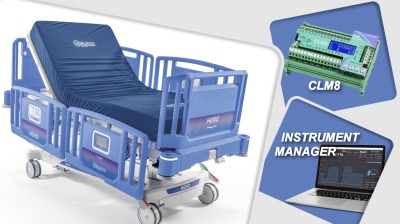
Weighing system for a hospital bed
In collaboration with Malvestio, we have developed a weighing system for a pediatric intensive care hospital bed: junction box and software for management and calibration.
Read more